

Direct capacity evidence
Loading the actual element or ground gives the most convincing proof of performance.
Structural Testing
In-situ load tests to verify capacity and deformation of foundations, soils and anchors.
These in-situ tests apply controlled loads and measure the resulting displacement. Static vertical and lateral load tests verify foundation response, plate load tests characterise the bearing and stiffness of the ground, and pull-out tests verify resistance to uplift.
Static in-situ tests load a foundation element or the ground directly and measure the settlement or movement. They give capacity and stiffness values that can be used directly to confirm or refine design.
Loading the actual element or ground gives the most convincing proof of performance.
Movement is recorded across the load range, not just at one point.
Vertical, lateral, plate and pull-out tests under a single method statement.
Results feed straight into foundation and anchor design decisions.
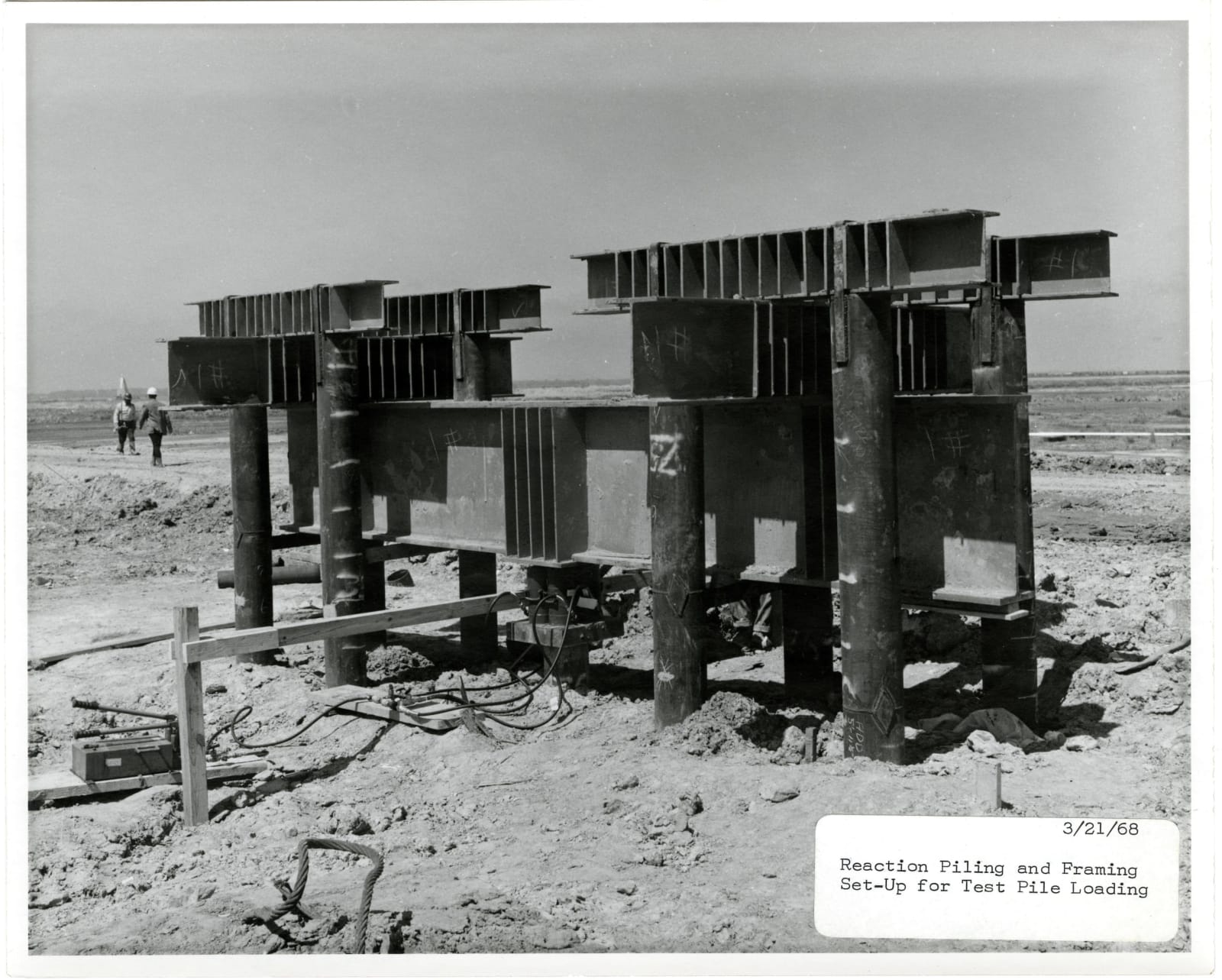
Arrange kentledge, reaction piles or anchors for the required load.
Fit dial gauges or transducers and a calibrated load cell.
Apply the loading schedule and hold each stage for the specified time.
Produce load-displacement curves and report the interpreted capacity.
From a few hours for a plate test to a couple of days for a large pile test including set-up.
A pull-out test loads an element in tension; a lateral test loads it horizontally.
Tell us about your project — our engineering team will follow up on scope, instrumentation and approach.