

See inside without drilling
Locate rebar, ducts and voids before you cut or core.
Non-Destructive Testing
Radar imaging of reinforcement, voids and buried features in concrete and ground.
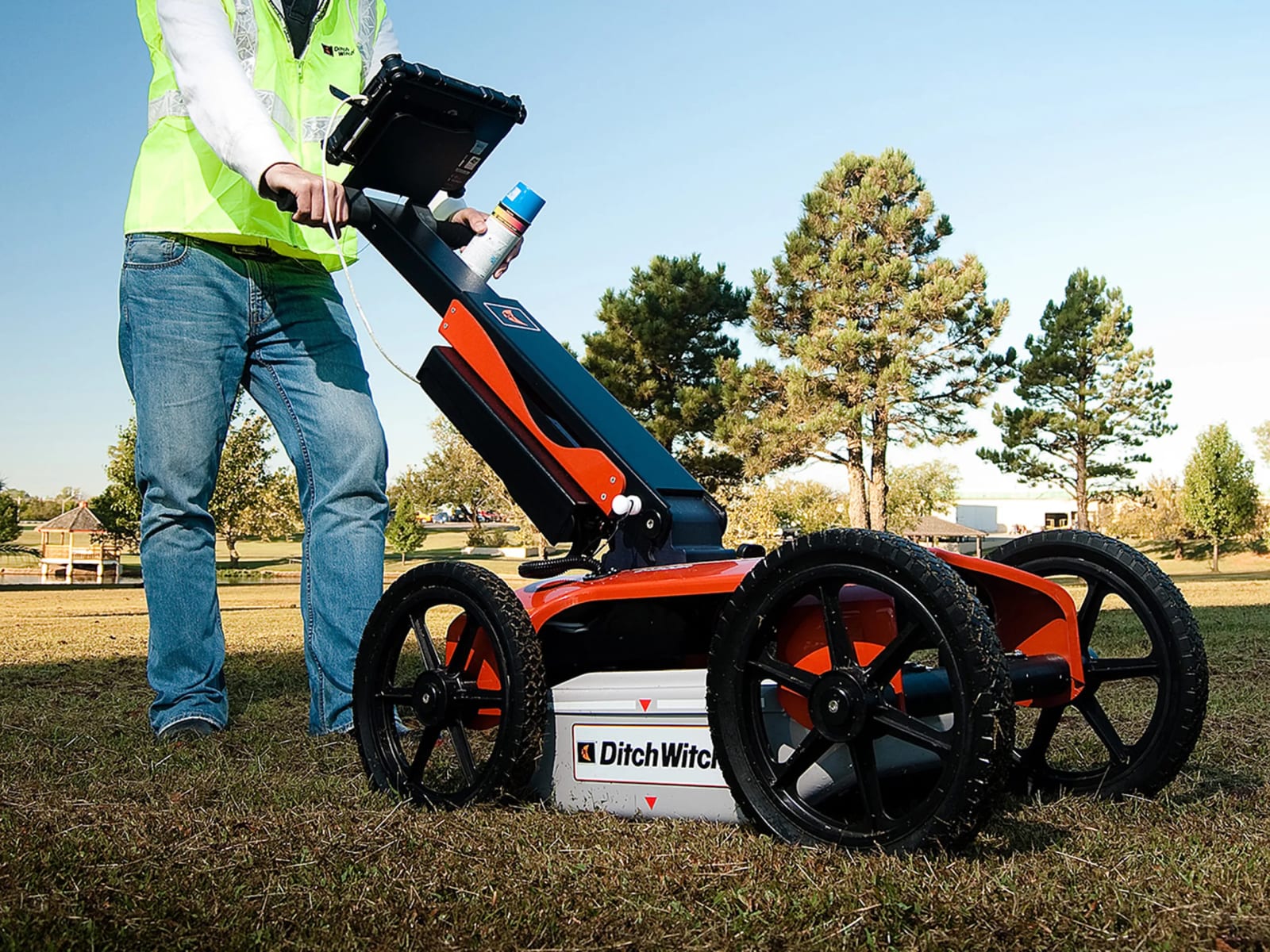
GPR sends electromagnetic pulses into concrete or soil and records reflections from interfaces. It is used to locate reinforcement, voids, utilities and layer boundaries without excavation.
GPR sends short radar pulses into concrete or ground and records the reflections. Changes in material show up as reflections, revealing reinforcement, voids, utilities and layer boundaries without digging or drilling.
Locate rebar, ducts and voids before you cut or core.
Large areas are scanned quickly along survey lines.
Finding hidden utilities and reinforcement reduces the risk of damage.
Concrete, pavement and soil.
Mark the grid or lines to be scanned.
Choose frequency to balance depth and resolution.
Move the antenna along the survey lines, recording data continuously.
Produce sections and plans marking features and depths.
Depth depends on antenna frequency and material: centimetres for high-frequency concrete scans, metres in favourable soils.
Wet, conductive soils absorb the signal and reduce penetration.
Tell us about your project — our engineering team will follow up on scope, instrumentation and approach.